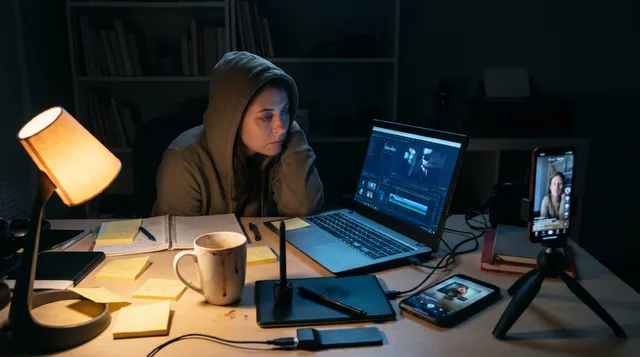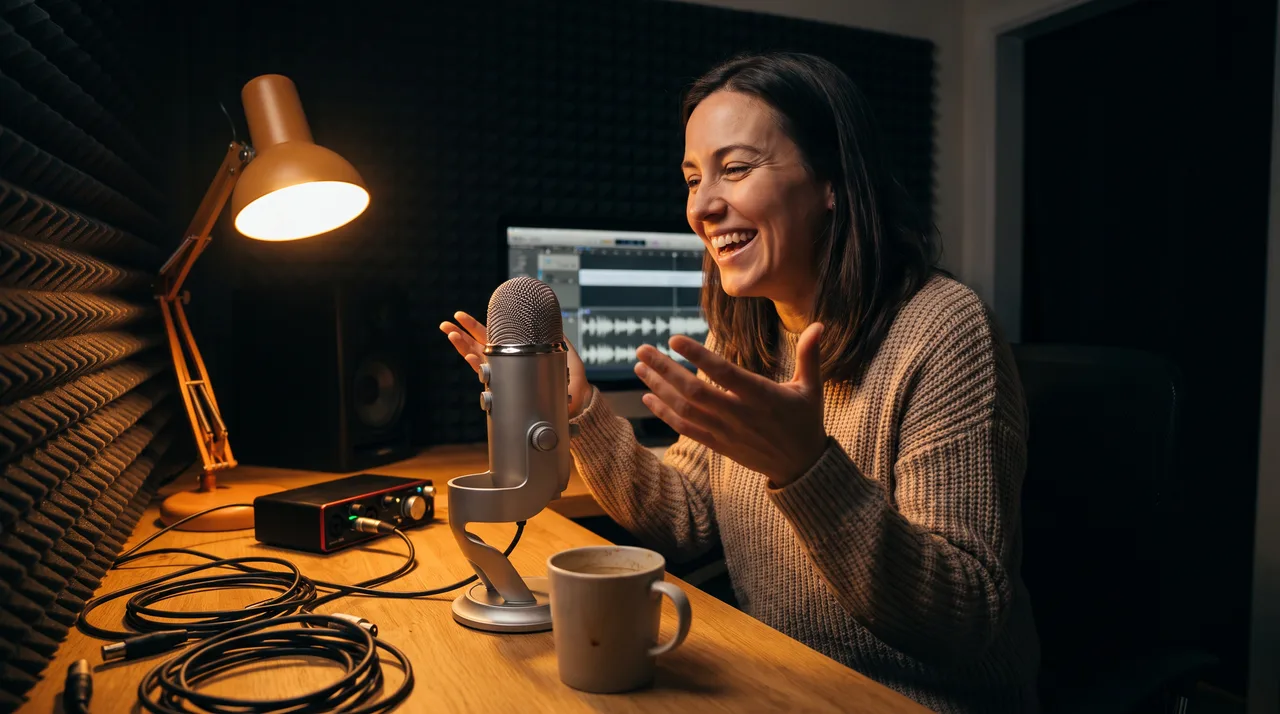
Long videos hide their best moments. The opening minutes are warm-up and scaffolding, while the sharpest, most shareable material tends to show up mid-conversation, once the energy and candor peak. Few viewers stay long enough to reach it, and scrubbing through by hand costs you time. That's why clip detection scans the whole file to surface those buried viral moments for repurposing.
Every long video has one moment worth more than the rest combined. It's that clean 30-second stretch where you said something sharp, landed a joke, or told a story that made someone lean in. That's where your viral moments live. The trouble is, almost nobody watching your full video ever reaches it, and almost nobody scrolling social media ever sees it as a clip.
So the best stuff ends up buried. Not because it isn't good, but because of how long content is built and how our attention actually works. Let's look at why that happens, and more importantly, how to pull those gems out.
Why the best moment is almost never at the start
Think about how you actually record a long video or podcast. The first few minutes are warm-up. You're reading the intro, setting context, thanking sponsors, explaining what the episode is about. It's necessary scaffolding, but it's rarely your most electric material.
The gold shows up later, usually somewhere between the 30% and 70% mark. By then you've relaxed, the conversation has found its rhythm, and a guest says something unguarded. That's when the real tension, insight, or humor appears.
There's a structural reason for this:
- Warm-up tax. The opening minutes go to setup, not payoff.
- Momentum curve. Energy and candor build as people get comfortable.
- Depth takes time. Your best insights usually need context you only establish mid-conversation.
- Unplanned magic. The most shareable lines are often spontaneous reactions, and spontaneity needs runway.
So the irony is baked in. The format rewards you for getting warmed up, then hides that reward deep inside a 60-minute file where almost nobody will find it.
The discoverability problem
A buried moment isn't just a creative loss. It's a distribution failure. Two different audiences never get to it.
Your full-video audience drops off first
Retention graphs are brutal. Most long videos lose a big chunk of viewers in the first two minutes and keep bleeding from there. If your best 30 seconds sits at minute 34, only a fraction of viewers will ever experience it. The moment that could have defined the episode plays to an emptying room.
Your social audience never finds it at all
Short-form platforms are where discovery happens now. But nobody clips minute 34 by accident. To surface it, someone has to watch the whole video, spot the moment, mark the timestamps, cut it, and caption it. That's an hour of attention plus editing time per episode. It's exactly why so many creators either skip clipping entirely or lazily grab the first usable chunk from the intro.
The result: the weakest material gets repurposed, and the strongest material dies in the archive.
What actually makes a moment go viral
Before you can surface viral moments, it helps to know what you're hunting for. The clips that travel tend to share a few traits:
| Trait | Why it works |
|---|---|
| Self-contained | It makes sense without the surrounding 60 minutes |
| Emotional spike | Surprise, laughter, outrage, or awe — a clear reaction |
| Strong hook | The first three seconds create a question or tension |
| A payoff | It resolves or lands within the clip's runtime |
| Quotable line | One sentence people want to repeat or caption |
Notice that none of these require the clip to be at the start of your video. They can happen anywhere. In fact, a self-contained emotional spike with a quotable payoff is far more likely to emerge mid-conversation than in a scripted intro.
That's the core tension. The qualities that make something shareable, and the place those qualities show up, are working against your ability to find them.
This is where clip detection changes the math of repurposing. Instead of a human scrubbing through an hour of footage hoping to stumble on the right 30 seconds, software reads the entire file and flags the segments most likely to perform.
How clip detection surfaces the buried gem
Modern clip detection tools watch several signals at once:
- Transcript analysis. Natural language processing scans what was said to find complete thoughts, strong statements, questions, and quotable lines.
- Audio dynamics. Spikes in volume, laughter, overlapping speech, and pacing shifts often mark the liveliest moments.
- Sentiment and emotion. Segments with high emotional charge tend to outperform flat, informational stretches.
- Structural completeness. Good clips have a beginning and an end. Detection favors segments that start and finish cleanly rather than cutting someone off mid-sentence.
The practical win: clip detection reads the whole video with equal attention. It doesn't get bored at minute 20 or distracted at minute 40. The moment at minute 34 gets evaluated just as carefully as the opening line. That's how buried viral moments finally get surfaced.
What it doesn't do
Clip detection is a candidate generator, not the final decision-maker. It hands you a shortlist of five to fifteen strong segments from an hour of footage. Your judgment still decides which ones fit your brand, your audience, and the platform you're posting to. The tool collapses the hour of scanning into a few minutes of reviewing. That's the real value.
A repurposing workflow that finds the best 30 seconds
Here's a practical process for turning one long video into a stream of clips, without watching the whole thing three times.
1. Run detection first, not last
Before you touch an editor, run your long file through a clip detection step to get a ranked list of candidate moments with timestamps. Starting here reframes the whole job: you're reviewing suggestions instead of hunting blind.
2. Review candidates for the hook
For each suggested clip, jump to the timestamp and ask one question: do the first three seconds make me want to keep watching? If a candidate has great substance but a weak opening, trim the lead-in or start a beat later. The hook is non-negotiable for short-form.
3. Check that it stands alone
Play the clip as if you'd never seen the full video. If it needs context the viewer doesn't have, either add a one-line text overlay to supply it or pick a different candidate. Self-contained always wins.
4. Tighten the edit
Cut dead air, filler words, and the slow ramp into the point. A detected moment might run 50 seconds raw; the shareable version is often 25. Every second you remove makes the clip denser.
5. Caption and format per platform
Burned-in captions are mandatory — most social video is watched muted. Reframe to vertical for TikTok, Reels, and Shorts. Keep one clean horizontal version for places that support it.
6. Post multiple clips from one video
If detection surfaced five strong moments, that's five posts, not one. A single hour-long episode can anchor a whole week of short-form. This is the whole promise of video repurposing: maximum output from content you already produced.
Why this matters more than making new content
Creators feel constant pressure to produce more. But you've probably already recorded dozens of hours of strong material with buried viral moments nobody has seen. Mining that archive is almost always a better use of time than starting from scratch.
Consider the math of good video repurposing:
| Approach | Effort | Output |
|---|---|---|
| Record a new short | New script, shoot, edit | 1 clip |
| Manually scrub an old video | 60+ min of review per episode | 1–2 clips |
| Detection-assisted repurposing | A few minutes of review | 5–10 clips |
The third row is why repurposing beats constant creation. You're not generating new ideas. You're recovering value you already created but never distributed.
The compounding effect
Each surfaced clip is also a discovery engine for your long content. A viral 30-second moment sends new viewers back to the full episode, which gives you watch time, subscribers, and more raw material to clip from next time. Surfacing buried moments isn't a side task. It's a growth loop.
Common mistakes that keep your best moments buried
Even creators who repurpose often get in their own way. Watch for these:
- Only clipping the intro. It's the easiest segment to grab and almost never the best one.
- Clipping chronologically. Posting moments in the order they happened ignores which ones are actually strongest.
- Clips that are too long. A great 20-second moment padded to 90 seconds loses its edge.
- No hook. Starting a clip with "so, as I was saying" guarantees a scroll-past.
- Skipping captions. A muted viewer with no text sees nothing worth stopping for.
- Repurposing once and forgetting. The same video can yield new clips months later as trends shift.
Start treating your archive as a library
Your long videos aren't finished products. They're source material. Inside each one is a handful of moments that could outperform anything on your channel, if someone would just dig them out and cut them clean.
Those moments stay buried not because they're weak. It's that the format hides them mid-video and manual discovery is too expensive to do consistently. Clip detection removes that expense, which finally makes it practical to surface your best viral moments at scale.
So next time you publish a long video, don't move on. Run it through detection, review the candidates, and cut the three or four strongest moments. The best 30 seconds you've ever recorded is probably already sitting in your archive, waiting for someone to notice it.