

Writing

AI script writer: from a topic or a transcript to everything you post

One recording or one topic becomes the script for a short, the hook on the front of it, and the week of writing around it: a blog article, a newsletter, show notes, a LinkedIn post, an X thread and the captions. All of it written with the whole recording as context, in the voice you already write in.

Free plan · No credit card · Works in the browser

AI Script Writer in Splicora

What you get

AI Script Writer, in practice

Seven kinds from one source

A blog article, a newsletter, show notes, a LinkedIn post, an X thread, social captions and the hook. Tick what you want and they are written together.

The whole recording is the context

A caption for a forty-five second clip is written knowing what was said in the other fifty-nine minutes. A standalone tool only ever has the clip.

In your brand voice

Trained on your best posts rather than a tone you picked from a dropdown, so the writing sounds like the account it goes out on.

Scripts for the camera-free half

The same writer produces the narration a faceless short reads and the script an avatar speaks, so the words and the delivery come from one place.

How it works

From a transcript to a week of posts.

  1. Start from a transcript or a topic

    Paste a link, upload a recording, or type what the piece is about. A transcript gives the writer more to work with; a topic is enough to start.

  2. Pick what you want written

    Any combination of the seven. The price for the set is shown before anything runs, item by item.

  3. Read it and change what you want

    Everything lands in the project, editable. Regenerate one piece without touching the rest.

  4. Send it out

    Captions go with their clips to the scheduler, the article and the newsletter go wherever you publish them, and a script goes straight into a short.

What the writing tool makes

Seven things, from one source, all with the same context behind them.

  • A blog article. A publish-ready piece of 1,100 to 1,600 words with a structure rather than a wall, at 3 credits.
  • A newsletter. The same material written for an inbox rather than a search result, at 2 credits.
  • Show notes. Summary, topics and timestamps for a podcast or a long video, at 1 credit.
  • A LinkedIn post and an X thread. The same argument at two very different lengths, 1 credit and 1 credit.
  • Social captions. One per clip, written for the platform the clip is going to, at 1 credit each.
  • A hook. The opening line, from the hook generator, at 1 credit.
Read more

What it does not do: invent an interview that did not happen. Everything it writes comes from the transcript or the topic you gave it, which is why a vague topic gives vague writing and a real recording gives something you can publish.

What the writing tool makes

Scripts for shorts and avatars

A script is a different job from an article. It has to be read out loud, in one take, by a voice that cannot see the punctuation you meant.

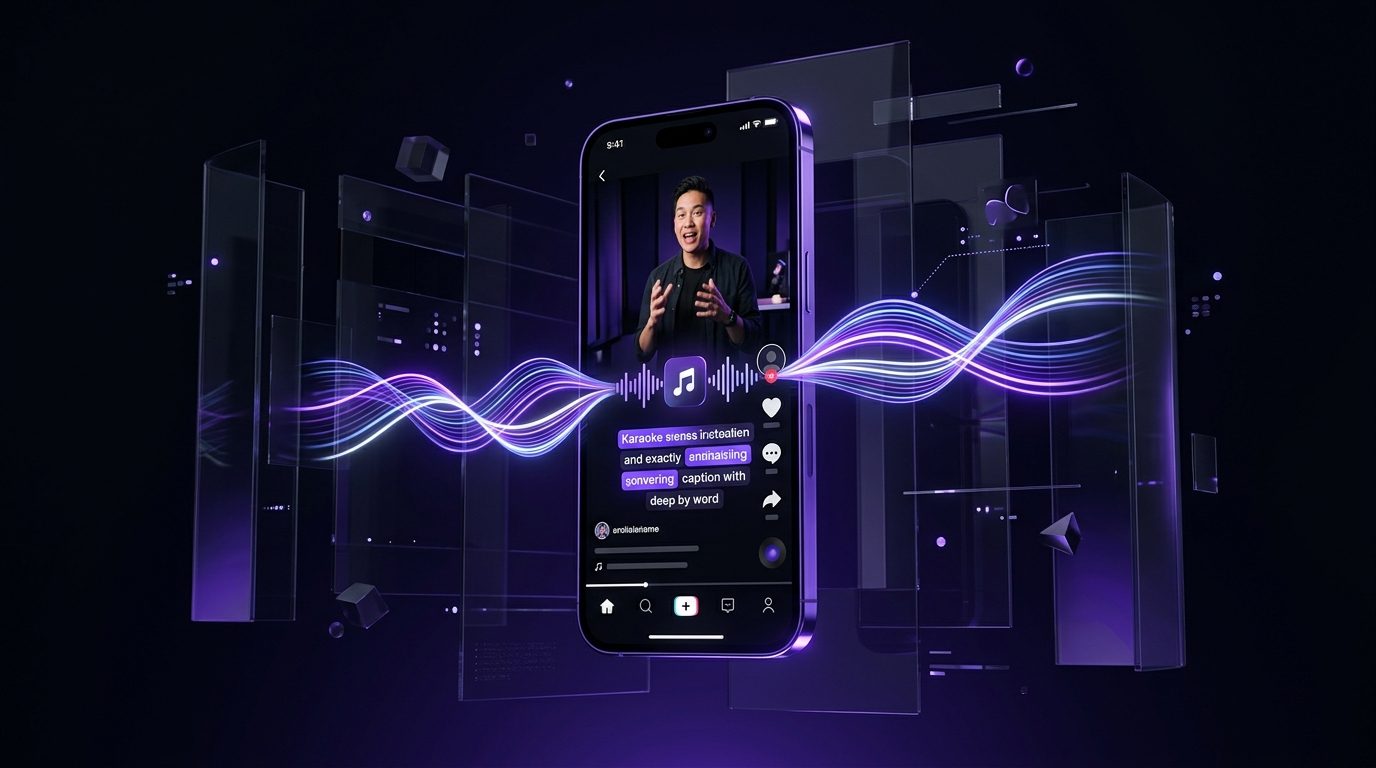
The writer produces narration for a faceless short in beats, so the visuals can be found for each one and the captions timed to the words. For an avatar it writes what the presenter says, at the length the clip is meant to run.

Both come back editable, because a script is the piece most worth reading aloud before you spend anything on voicing it.

Scripts for shorts and avatars

Why the brand voice matters here more than anywhere else

Clips look like you because they are you. Writing does not: a caption written in the default register of a language model reads like every other caption written that way, and the gap between the clip and the caption is what makes an account feel automated.

Brand Voice is trained on the posts you have already written, so the writing keeps your sentence lengths, your vocabulary and the things you do not say. One profile per brand or client, so an agency does not have to choose.

It applies everywhere the product writes: captions, articles, hooks, show notes and the scripts above.

Why the brand voice matters here more than anywhere else

What it costs

Each piece is priced on its own and the set is totalled before anything runs: 3 credits for an article, 2 credits for a newsletter, 1 credit for show notes, 1 credit for a post or a caption, 1 credit for a thread and 1 credit for a hook.

So a full week from one recording, an article plus a newsletter plus notes plus a thread plus five captions, is 12 credits.

The free plan includes 25 credits a month with no card. A piece that fails to generate is refunded, and the pricing page lists everything side by side.

What it costs

Also in Splicora

Writing is the half of the product that needs no camera and no generation at all. Beside it, the same workspace makes images, video, voices and avatars from a sentence.

And the half that starts from a recording: the clip generator finds the moments, captions make them work on mute, and the scheduler posts the clips and the writing together.

Also in Splicora

Questions

The things people ask first.

Yes. A topic is enough to produce a draft, and a transcript produces something closer to publishable, because the writer has the actual argument and the actual phrasing to work from.

Between 1,100 and 1,600 words, structured with a title, sections and a conclusion rather than delivered as one block.

If you set up a brand voice, yes: it is trained on your own best posts. Without one it writes in a clear, neutral register.

Yes, everything lands in the project as editable text, and any single piece can be regenerated without redoing the others.

Yes. Each client can have its own brand voice profile, so the writing for one does not drift into the register of another.

Also in Splicora

You do not have to start with a recording.

The same workspace generates images, video, voices and avatars from a sentence, with the price of each shown before you spend a credit. Whatever it makes lands in the project beside the clips, captions and posts, ready for the same scheduler.

Start with what you have.

A link, an upload, or a sentence. Every price is shown before you spend a credit.

We use cookies for analytics. Necessary cookies always run. Cookie Policy